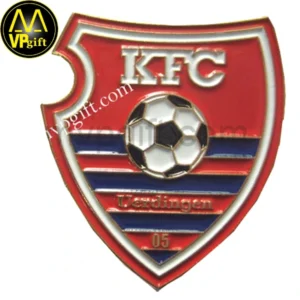
Custom Badge and Pin Badge Manufacturing for Professional Identification and Law Enforcement Use
Custom badges remain one of the most trusted forms of visual identification in security, public service, corporate operations, and membership-based organizations. For international B2B buyers, the value of a well-produced badge is not only in its appearance, but also in its durability, authenticity, and consistency across every production batch. Whether the requirement is a pin badge for employee recognition, a metal badge for event identification, or a police badge designed for official presentation, the manufacturing process must balance precision, material performance, and long-term wear resistance.
In professional procurement, buyers often evaluate badges by more than shape and artwork. They look at base metal selection, plating finish, attachment type, engraving accuracy, color fill stability, and the ability to meet repeat order requirements. A badge is often handled daily, exposed to friction, sweat, humidity, and repeated fastening. That is why technical production standards matter as much as design. This article explains the main production considerations behind custom badge, pin badge, and police badge projects, with a focus on materials, manufacturing methods, and application-specific performance.
Why Custom Badges Matter in Professional Identification
Badges serve as a practical identity tool in many industries. In security operations and public-facing institutions, they support clear recognition and controlled access. In corporate settings, pin badges can strengthen brand consistency at exhibitions, conferences, and customer-facing events. In nonprofit and membership organizations, badges often represent authority, belonging, or achievement. A properly made badge communicates credibility before a word is spoken.
For procurement teams, the most important advantage of custom production is control. The buyer can specify size, thickness, finish, shape, logo placement, text layout, numbering, and fastening method. This level of customization is particularly important when the badge must fit an organization’s visual standards or operational requirements. For example, a police badge may require a rigid metal body with high-relief detailing, a secure clasp, and a premium polished or antique finish. A corporate pin badge may need a lighter structure, enamel color accents, and a cost-efficient production method for high-volume use.
Common Materials Used in Badge Manufacturing
Material selection directly affects appearance, strength, and service life. The most common base materials for custom badges include zinc alloy, brass, iron, and stainless steel. Each material has specific advantages depending on the intended application.
Zinc alloy is widely used for complex 3D designs because it allows detailed die-casting with strong edge definition. It is suitable for raised logos, layered emblems, and badges that require deep texture or sculpted elements. Zinc alloy also supports a range of plating finishes and can be produced with moderate thickness without becoming too heavy for daily wear.
Brass is valued for its premium appearance and clean engraving performance. It is often selected for polished badges, commemorative pieces, and badges that require crisp line definition. Brass can be used for etched or stamped designs, and it offers good compatibility with enamel filling and multiple surface finishes.
Iron is a practical option for large-volume production where cost control is important. It is suitable for stamped pin badges and flat-form badges with simpler designs. When paired with plating and protective coating, iron badges can achieve good visual quality for mass distribution.
Stainless steel is chosen for corrosion resistance and a modern metallic appearance. It is especially useful for applications where exposure to moisture or frequent handling is expected. Stainless steel badges are often used when a sleek, durable, and low-maintenance surface is preferred.
Production Techniques: What Buyers Should Understand
The manufacturing method determines the visual effect and structural quality of a badge. One of the most common methods is die casting, which is especially suitable for 3D relief badges. In this process, molten alloy is injected into a precision mold to create raised details and recessed areas. After casting, the badge is polished, plated, and finished with enamel or protective coating where required.
Stamping is often used for flat badges and pin badges with sharp outlines. Metal sheets are pressed using a die to create a clean profile and consistent thickness. This method is efficient for designs that do not require deep relief but still need strong edge definition.
Etching is useful when the artwork includes fine text, intricate linework, or detailed patterns. Chemical etching removes material selectively to form recessed areas. The process is often followed by color filling or plating, producing a precise and refined surface.
Soft enamel and hard enamel finishing options are common for colored badges. Soft enamel creates visible depth between metal lines and color areas, giving the badge a textured look. Hard enamel is polished flat after filling, resulting in a smooth surface with higher abrasion resistance. Buyers choosing between these options should consider appearance, wear resistance, and the level of detail required.
Electroplating is another key step. Common finishes include gold tone, silver tone, antique brass, antique copper, black nickel, and matte finishes. The plating layer not only affects appearance but also provides surface protection against oxidation and wear. For badges used in daily operations, plating quality can significantly influence product life and visual consistency.
Design Features That Improve Functionality
A badge is not only decorative. It must be practical in use. The shape, thickness, and fastening system all affect comfort and reliability. For pin badges, the attachment style may include butterfly clutch, safety pin backing, magnetic backing, or screw-back options. The best choice depends on the garment type, intended wear duration, and need to avoid fabric damage.
For police badges and official-style identification, secure attachment is essential. A stronger backing system reduces the risk of loss during active movement. Many buyers also request serial numbers, engraved identifiers, or laser marking for internal tracking and authentication. These details help organizations manage inventory and maintain control over badge issuance.
Thickness is another important specification. A thinner badge may be appropriate for lightweight apparel and frequent promotional use, while a thicker badge offers a more authoritative look and better structural rigidity. Buyers should also consider surface protection such as epoxy coating, clear varnish, or anti-scratch treatment, especially for badges that will be carried every day.
Police Badge Requirements: Precision, Durability, and Symbolic Value
Among all badge categories, the police badge has some of the most demanding production expectations. It must project authority, support identity verification, and remain reliable under long-term use. Because of this, the design usually emphasizes symmetry, high-contrast detailing, and strong metal presence. The badge may include shield shapes, emblems, text rings, stars, eagles, or other official-style elements depending on the organization’s requirements.
From a technical standpoint, a police badge often benefits from die-cast zinc alloy or brass construction with multi-step polishing and plating. The raised details should be clear enough to remain visible under various lighting conditions, while recessed areas can be darkened or antiqued to improve readability. In some cases, laser engraving is used for names, serial numbers, or assigned identification codes. These features help improve traceability and reduce the risk of unauthorized duplication.
Because police badges are often worn for extended periods, comfort and secure fit are important. The badge must feel stable on the uniform without damaging the fabric. Buyers should also review the edge finish carefully. Smooth edges, consistent plating, and balanced weight improve both safety and wearer comfort.
Quality Control for International B2B Buyers
Professional buyers should assess a badge supplier by production control, not just sample appearance. Important quality checkpoints include mold accuracy, color consistency, plating thickness, logo sharpness, edge smoothness, attachment strength, and packaging protection. For repeat orders, batch-to-batch consistency is especially important. Even small deviations in finish tone or dimensions can create issues for organizations that issue badges as part of a standardized identity system.
It is also important to confirm the supplier’s sampling process. A proper sample should reflect actual mass-production methods, not a hand-made approximation. Buyers should request details on mold creation, enamel curing, polishing standards, and inspection criteria before final approval. For projects involving official or semi-official identification, such as a police badge, documentation and approval stages are often necessary to ensure the final product matches the required design exactly.
Applications Across Industries
Custom badges are used in a wide range of sectors. In security and law enforcement-related environments, they help indicate identity and authority. In hospitality and retail, pin badges support staff recognition and customer trust. In events and exhibitions, custom badges are used for organizing teams, VIP access, and controlled entry. In schools, clubs, and associations, they support membership identity and achievement recognition.
Because different sectors prioritize different performance characteristics, there is no single ideal badge specification. Instead, the most effective solution is one that matches the intended use. A light promotional pin badge may focus on cost efficiency and color presentation, while a police badge may require premium detailing, durability, and authentication features. Understanding the end-use environment is the key to choosing the right material and process.
Conclusion: Choosing the Right Badge for Professional Use
Custom badge manufacturing is a technical process that combines design, metalworking, surface finishing, and functional hardware selection. For B2B buyers, the best results come from matching the badge type to the application, whether that means a simple pin badge for staff identity or a detailed police badge for official wear. Material choice, production method, plating finish, and fastening system all influence how the badge performs in daily use.
When sourcing badges for international operations, buyers should look for suppliers that can maintain consistent quality, support custom specifications, and deliver durable products that reflect organizational standards. A well-made badge does more than display a name or logo. It supports trust, recognition, and professional identity across every interaction.